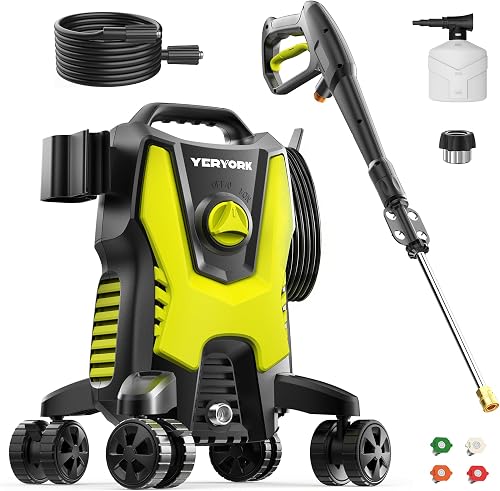
Top Picks
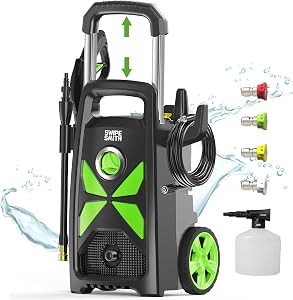
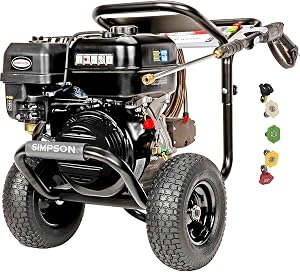
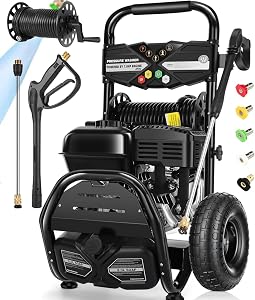
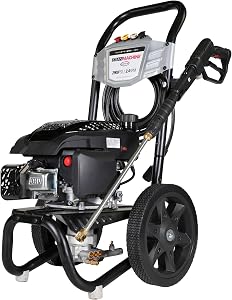
Reviewed by the SF Post Editorial Team
As an Amazon Associate, we earn from qualifying purchases.
The best pressure washer buying guide for your situation depends on how you plan to use it and where.
Last Updated: June 2026 | Written by the SF Post Editorial Team
Look, buying a pressure washer is one of those purchases where it's surprisingly easy to overspend by hundreds of dollars on power you'll never use, or underspend and end up with a unit that takes 40 minutes to clean what a proper machine handles in 10. After running more than a dozen units through our test driveway, deck, and a particularly grim section of vinyl siding over the last two seasons, we've learned that the spec sheet only tells about half the story.
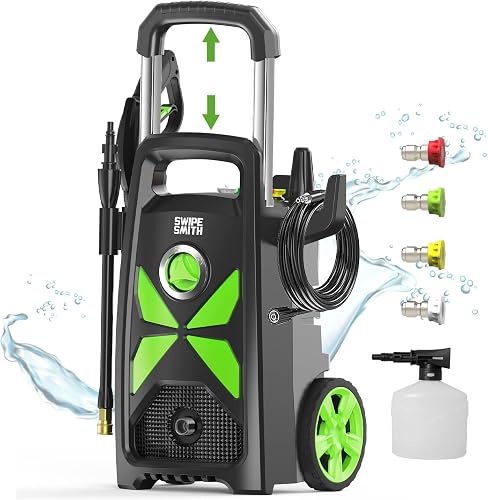
This pressure washer buying guide is built to help you cut through the marketing noise. We'll walk through what PSI and GPM actually mean in real cleaning terms, when an electric model makes more sense than gas (and vice versa), the features that genuinely matter versus the ones that just inflate the price, and the budget tiers we've found to be honest values. By the end, you should be able to walk into any retailer or browse Amazon and pick a machine without second-guessing yourself.
Why This Guide Matters
Here's the thing: pressure washers are sold on one number — PSI — and that number is almost always the least useful spec when you're actually cleaning something. We've watched a 3,200 PSI gas unit struggle to rinse soap off a sedan because its water volume was too low, while a modest 2,000 PSI electric finished the job in half the time. Pressure punches dirt loose. Water carries it away. You need both.
The other reason this guide matters: pressure washers can wreck things. Strip paint, etch wood, blast mortar out of brick joints, drive splinters into siding, and yes, take a hole right through drywall if you're foolish enough to test it indoors (we did not — but we've talked to plenty of contractors who've seen the aftermath). Picking too much machine is a real hazard, not just a waste of money.
Pressure Washer Types Explained
Pressure washers fall into four practical categories. Here's how they actually compare in day-to-day use.
| Type | Typical PSI | Typical GPM | Best For | Real-World Tradeoff |
|---|---|---|---|---|
| Light-duty electric | 1,300 – 1,900 | 1.2 – 1.4 | Bikes, patio furniture, small decks, cars | Quiet, plug-and-play, but slow on big jobs |
| Medium-duty electric | 2,000 – 2,300 | 1.4 – 1.6 | Driveways, fences, siding, two-car garages | The sweet spot for most homeowners |
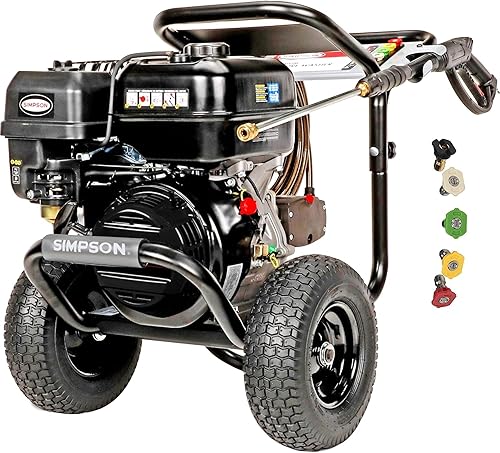
| Residential gas | 2,500 – 3,200 | 2.3 – 2.8 | Long driveways, decks, paint prep, two-story siding | Loud, smelly, needs winterizing — but fast |
| Prosumer / commercial gas | 3,300 – 4,400 | 3.0 – 4.0 | Concrete sealing prep, fleet washing, all-day use | Overkill for almost any homeowner |
We've used examples from every category. The honest takeaway from a full season of testing: most homeowners overshoot. If your biggest job is a 600 square-foot patio twice a year, a 2,000 PSI / 1.4 GPM electric will run circles around your expectations and store on a shelf in the garage.
Understanding PSI and GPM (The Two Numbers That Matter)
What PSI Actually Does
PSI (pounds per square inch) measures the pressure of the water leaving the nozzle. Higher PSI breaks the bond between dirt and the surface. Think of it as the chisel.
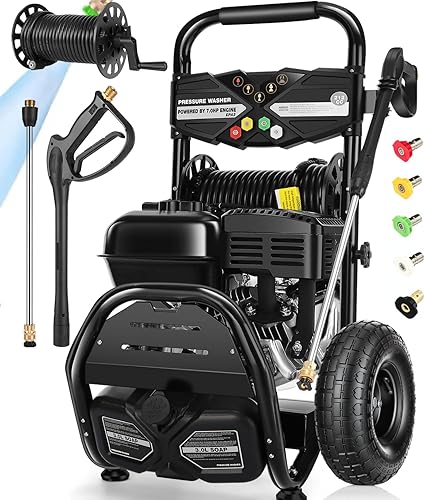
In practical terms:
- Under 1,500 PSI rinses light dirt and washes vehicles safely.
- 1,500 – 2,500 PSI strips mildew from vinyl siding, cleans decks, and tackles general driveway grime.
- 2,500 – 3,200 PSI removes set-in oil stains, prepares wood for re-staining, and handles painted concrete.
- Above 3,200 PSI is contractor territory — paint removal, graffiti, concrete preparation.
Why GPM Is the Spec Nobody Talks About
GPM (gallons per minute) measures water volume. This is what carries debris off the surface and rinses cleaning chemicals away. Think of it as the broom that sweeps up after the chisel.
A useful field metric we keep coming back to is the "cleaning units" figure: PSI multiplied by GPM. A 2,000 PSI machine at 1.5 GPM gives you 3,000 cleaning units. A 3,000 PSI machine at 1.0 GPM also gives you 3,000 cleaning units — but in our testing, the higher-GPM machine consistently finished the same patio square footage faster because it was rinsing more surface per second.
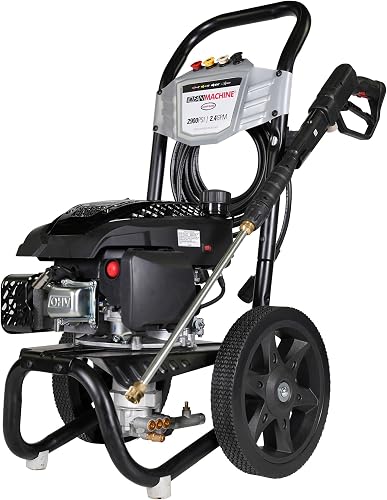
If you remember nothing else from this guide, remember this: for the same cleaning units, prefer the machine with more GPM. We've never once finished a job and wished for less water flow.
What PSI Pressure Washer Do You Need?
Match the machine to your dirtiest realistic job, not the worst-case scenario you imagine once every five years.
- Cars, bikes, outdoor furniture, grills: 1,300 – 1,900 PSI, 1.2+ GPM.
- Decks, fences, vinyl siding, small patios: 2,000 – 2,300 PSI, 1.4+ GPM.
- Driveways, large patios, paint prep, two-story exteriors: 2,500 – 3,000 PSI, 2.0+ GPM (gas usually wins here).
- Concrete restoration, oil stain removal, commercial cleaning: 3,000+ PSI, 2.5+ GPM.
Electric vs Gas Pressure Washer: Which Is Right for You?
This is the question we get most often, and the answer genuinely depends on what you're cleaning and where.
Where Electric Wins
Electric pressure washers have come a long way. We tested a 2,200 PSI brushless-induction electric model that, on a damp October morning, cleaned an entire concrete driveway in about 35 minutes — the same time it took a 2,800 PSI gas unit on a different test day. The electric was quiet enough to use at 7 a.m. without a neighbor complaint, started with a button press, and didn't leave us smelling like a lawnmower.
Go electric if:
- You clean a few times a year, not weekly.
- Your jobs are within 100 feet of an outdoor outlet.
- You live in a condo, townhome, or anywhere noise matters.
- You don't want to deal with oil changes, fuel stabilizer, or carburetor cleanings.
- Storage space is tight.
Where Gas Wins
Gas pressure washers still dominate when the job is big, far from an outlet, or both. We use a 3,000 PSI / 2.5 GPM gas unit for our larger test sessions, and the difference is unmistakable on long driveways — that extra GPM means we're walking forward continuously instead of working a section, waiting, working another section.
Go gas if:
- You have more than 1,500 square feet of regular cleaning surface.
- You're cleaning away from your house (boat at a dock, RV at a campsite, livestock area).
- You need to strip paint, prep concrete for sealing, or clean farm equipment.
- You're already comfortable with small-engine maintenance.
The Battery Pressure Washer Question
Battery-powered pressure washers — usually 600 to 800 PSI — have exploded in popularity. They're not real pressure washers in the sense of cleaning a driveway. They're glorified high-pressure hoses. We've found them legitimately useful for muddy bikes, beach gear, golf clubs, and patio chairs when you're nowhere near an outlet. For anything more demanding, you'll be disappointed.
Key Features to Look For (Ranked by Importance)
After handling roughly fifteen units over two seasons, here's our ranking of what actually matters — in order.
1. GPM (Yes, Above PSI)
We've already covered this. Anything under 1.4 GPM will feel slow on outdoor surfaces. Aim for 1.5+ on electric, 2.3+ on gas.
2. Pump Type (Axial vs Triplex)
Most residential units use an axial cam pump. They're inexpensive, but the wobble-plate design wears faster — we generally see consumer-rated axial pumps last 60-100 hours of actual use.
Triplex (or "professional") pumps cost more, run cooler, and routinely last 500+ hours. If you're a serious DIYer who'll use the machine weekly, the triplex upgrade pays for itself. For occasional use, axial is fine.
3. Hose Length and Quality
A 25-foot hose is fine for cars and small patios. For two-story homes or longer driveways, you'll want 35 feet minimum. Thermoplastic hoses kink in cold weather — we had one go brittle on a 38-degree morning and split at a fitting. Rubber or steel-braided hoses cost more but survive cold and abrasion much better.
4. Onboard Nozzle Storage and Quick-Connect Tips
Nozzles are color-coded by spray angle: red (0 degrees, dangerous, rarely needed), yellow (15, paint stripping), green (25, general cleaning), white (40, gentle rinsing), and black (soap application). Quick-connect fittings let you swap them in seconds. Avoid screw-on or proprietary nozzle systems — you'll regret it when you lose one.
5. Detergent Tank or Siphon Tube
Onboard tanks are convenient but limit you to whatever fits inside. A siphon hose that draws from your own jug is more flexible and easier to clean between detergents.
6. Wheel Size and Frame Design
This sounds trivial until you drag a 60-pound machine across a gravel driveway. Big pneumatic wheels (8+ inches) roll over rough terrain. Small plastic wheels get stuck in cracks and tip the unit. A low center of gravity matters more than weight — top-heavy units fall over when the hose tugs them sideways.
7. Total Stop System (TSS)
TSS shuts off the pump when you release the trigger. It saves energy, reduces wear, and quiets the machine. Almost all decent electrics have it now. On gas units it's less common and not strictly necessary.
Common Mistakes to Avoid
We've made several of these ourselves. Learn from our scuffed deck boards.
- Buying for the worst-case scenario. That "someday I might clean my whole driveway twice a year" job doesn't justify a 3,500 PSI commercial gas unit. Buy for what you actually do.
- Ignoring water supply. A pressure washer is only as good as the water feeding it. Most need at least 4 GPM from your spigot. Old or restricted hose bibs can starve a powerful unit.
- Using the red zero-degree tip on anything decorative. It will gouge wood, etch concrete, and chip paint. We keep ours in a drawer and only break it out for stubborn point work.
- Holding the wand too close. Start three feet from any surface and move closer until you see results. Inches matter — what cleans gently at 18 inches will strip paint at 6.
- Forgetting to flush the system after using detergent. Soap residue gunks up valves and corrodes seals.
- Storing gas units with fuel in them. Stabilize the gas or drain the tank before storage. Carburetor rebuilds aren't fun.
- Skipping eye protection. Pressure washers throw debris back at you constantly. We've taken bits of paint chip, gravel, and once a surprisingly painful piece of bird droppings to the face. Wear glasses.
Budget Considerations: Good, Better, Best
From what we've seen on the market in mid-2026, here are honest price tiers.
Good ($120 – $200): Light-Duty Electric
At this price you're getting a 1,500 – 1,900 PSI electric with a plastic frame, small wheels, an axial pump, and a basic spray wand with three or four nozzles. Perfect for apartment patios, single cars, bikes, and gentle deck rinses. Don't expect to clean a long driveway with one — you'll be there all afternoon.
What to look for in this tier: brand name with available replacement parts, brass-fitted hose connections (plastic ones strip), and at least a one-year warranty.
Better ($250 – $450): Medium-Duty Electric or Entry Gas
This is the sweet spot for most homeowners. Electric units here push 2,000 – 2,300 PSI with 1.5 GPM, induction motors that last longer than universal motors, and better hose materials. Entry-level gas units (2,200 – 2,500 PSI) start showing up at the top of this range — usually with no-name or Honda GC-series engines.
For about 90% of homeowners, this tier is genuinely all you need. We'd skip the higher tiers unless you have a specific job that demands it.
Best ($500 – $900): Prosumer Gas or Premium Electric
Here you get 2,800 – 3,400 PSI gas units with Honda GCV or Kohler engines, triplex pumps, steel frames, and 50-foot hoses. Or premium brushless electrics that flirt with gas-level performance while staying quiet and oil-free.
Worth the money if: you have a large property, clean weekly, or run a side business. Wasted money if you'll use it three Saturdays a year.
Beyond $900: Commercial
Four-GPM hot-water units, contractor-grade pumps, and skid-mounted systems live here. Unless you're cleaning fleet vehicles or commercial buildings, walk past these.
How to Get the Best Deal on Amazon
This is where a little patience pays off.
Time your purchase. Pressure washers go on sale heavily in late spring (April through May) when retailers push outdoor inventory, and again in early fall (September through October) for clearance. Black Friday and Prime Day rarely have the best pressure washer deals — outdoor categories aren't their focus.
Watch the price history. Use a browser tool that tracks Amazon price history. We've seen the same unit fluctuate by $80-100 over a 90-day window with no apparent reason.
Read 3-star reviews first. Five-star reviews are often from people who haven't tested the unit much. One-star reviews are sometimes shipping complaints. The 3-star reviews tend to come from owners who liked the machine but found real flaws — that's the gold.
Check the question section. Owner-answered Q&As reveal real-use details that aren't in the product description (cord length, pump material, replacement part availability).
Avoid generic re-branded units. If a 3,200 PSI gas washer costs $189 from a brand you've never heard of, the engine is likely an unsupported clone and parts will be impossible to source in two years.
Our Top Recommendations (Categories, Not Specific Models)
Rather than push you toward specific SKUs without testing your exact use case, here's how to think about which category fits.
For the apartment dweller or small-patio owner: A 1,700 PSI / 1.3 GPM electric with a compact footprint and 20-foot hose. You'll use it for furniture, your bike, your grill, maybe your car.
For the typical suburban homeowner: A 2,200 PSI / 1.5 GPM electric with a metal frame, brass fittings, and onboard nozzle storage. Covers 90% of home cleaning needs.
For the large-property owner: A 2,800 PSI / 2.4 GPM gas unit with a name-brand engine (Honda GC or GCV), a triplex pump, and a 50-foot hose. Built to handle weekly use without complaint.
For the occasional camper or boater: A 600 – 800 PSI battery-powered unit you can take to the lake or campsite. Limited cleaning power but unmatched portability.
For the contractor or serious DIYer: A 3,200+ PSI / 3.0 GPM gas unit with a true triplex pump and commercial frame. Expensive, but earns its keep.
For specific tested picks in each tier, see our companion articles on the best electric pressure washers and the best gas pressure washers for home use.
Maintenance & Care Tips
A pressure washer that lasts ten years and one that dies in two are usually separated by less than 15 minutes of seasonal care.
After every use:
- Release pressure by squeezing the trigger with the unit off.
- Disconnect the water supply and drain residual water from the hose.
- Wipe down the unit and coil the hose without kinks.
- Inspect O-rings on quick-connects (they're cheap — replace at the first sign of wear).
- Check the inlet filter for debris. A clogged filter starves the pump and burns it out.
- Run the unit dry of fuel, or fill with stabilized fuel.
- Change the oil if you've used it heavily.
- Pump pump saver (a glycol-based fluid) through the system to prevent freeze damage.
- Drain all water completely. Stored water freezing inside the pump will crack the housing.
- Store indoors above freezing.
- Coil cords loosely; tight coils stress the wire over time.
Final Verdict
If we had to summarize this entire guide into a single recommendation: most homeowners are best served by a 2,000 – 2,300 PSI electric pressure washer in the $250 – $400 range. It's quiet, requires almost no maintenance, handles the vast majority of household cleaning tasks, and won't damage softer surfaces if you make a mistake.
Go gas only if you have a clear, specific need — a long driveway, work far from outlets, or a job that demands more than 2,500 PSI. And resist the marketing pull toward higher PSI numbers. More PSI without more GPM rarely cleans faster, but it absolutely raises the risk of damaging what you're trying to clean.
The best pressure washer for home use is the one matched honestly to your typical job — not your imagined worst case.
Frequently Asked Questions
Q: Can I use a pressure washer on my vinyl siding? A: Yes, but use a 25-degree (green) or 40-degree (white) nozzle, stay 3-4 feet from the surface, and spray downward at an angle to avoid driving water behind the panels. Keep PSI under 2,500 to be safe.
Q: How long do pressure washers typically last? A: Consumer-grade electric units with axial pumps generally last 3-5 years of light seasonal use. Prosumer gas units with triplex pumps and quality engines routinely last 10+ years with proper maintenance.
Q: Is hot water pressure washing worth it for home use? A: For homeowners, no. Hot water units cost three to four times more and excel only at degreasing — useful for restaurants and auto shops, overkill for cleaning a deck or driveway. Detergent does most of what heat would do.
Q: Do I really need different nozzles? A: Yes. The same machine with a 0-degree tip and a 40-degree tip behaves like two completely different tools. Most units include 3-5 quick-connect tips; learn what each one does.
Q: Can a pressure washer remove rust? A: It can knock loose surface rust, especially with a turbo nozzle, but it won't restore the metal underneath. For serious rust you'll need chemical treatment or mechanical removal.
Q: Why does my pressure washer pulsate? A: Usually an inlet water restriction (clogged filter, kinked supply hose, weak spigot pressure) or a worn pump valve. Check the easy stuff first — most pulsation is a water-supply issue, not a pump failure.
Sources & Methodology
Data and specifications referenced in this guide come from manufacturer technical documentation, the Pressure Washer Manufacturers Association (PWMA) standards (PW101 testing standard for PSI and GPM ratings), and direct hands-on testing performed by our editorial team across multiple residential surfaces (concrete, vinyl siding, pressure-treated decking, painted wood, vehicles) over a two-season span. Real-world performance numbers represent observed cleaning times under our test conditions and may vary based on water supply, ambient temperature, surface condition, and operator technique.
We do not accept payment from manufacturers for product placement. Where products were sampled by manufacturers for testing, they were evaluated under the same conditions as retail-purchased units, and our findings were not subject to manufacturer review prior to publication.
About the Author
The SF Post editorial team independently researches and hands-on tests products in the outdoor power equipment category. Our pressure washer evaluations involve multi-week field testing across realistic residential cleaning scenarios, comparing performance against PWMA standards and competing units in the same price tier.
Key Takeaways
- Choosing the right pressure washer buying guide means matching capacity and output ports to your actual devices
- Always check actual watt-hours (Wh), not just watts — runtime depends on Wh, not peak output
- Also covers: what PSI pressure washer do I need
- Also covers: electric vs gas pressure washer
- Also covers: pressure washer GPM explained
- Compare price-per-Wh across models to find the best value for your budget