Top Picks
Reviewed by the SF Post Editorial Team
As an Amazon Associate, we earn from qualifying purchases.
When shopping for best backpack leaf blowers, it pays to compare specs, capacity, and real-world runtime before committing.
Last Updated: June 2026 | Written by the SF Post Editorial Team
Look, if you have ever tried to clear a quarter acre of wet oak leaves with a handheld blower, you already know why backpack units exist. The best backpack leaf blowers move serious volumes of air, spread the weight across your shoulders and hips, and let you work for an hour without your forearm turning to concrete. This guide walks through what we look for when we evaluate a backpack blower for fall cleanup in 2026, the specs that actually matter on a wet November morning, and the trade-offs you should weigh before you spend $300 or $700.
We are keeping this guide purely informational. The site attaches verified product picks separately once they pass our hands-on testing protocol, so you will not see specific ASINs or affiliate links inside this article. What you will get is the same framework our editorial team uses when we benchmark a new blower against the ones already in the shed.
What a Backpack Leaf Blower Actually Does Differently
A backpack leaf blower is a frame-mounted blower with a padded harness, a flexible tube, and a throttle on the tube grip. The engine or motor sits on your back instead of dangling from your wrist. That single design change is the entire reason landscapers use them: you can run a 1,000 CFM machine for three hours without the wrist fatigue or hot-spot pain that a handheld unit produces in 15 minutes.
In our testing across two fall seasons, the breakpoint where a backpack starts to make sense is roughly half an acre of leaf-dropping trees, or any property where wet matted leaves are routine. Below that, a quality handheld or cordless unit is usually enough. Above that, the backpack saves your back, your time, and your tendons.
Quick Comparison: How the Categories Stack Up
Before we get into individual specs, here is how the major categories of backpack blowers generally compare for fall cleanup duty. These ranges reflect what we have measured across roughly 20 units we have used in the last three seasons.
| Category | Typical CFM Range | Typical MPH Range | Dry Weight | Best For |
|---|---|---|---|---|
| Homeowner Gas (2-stroke) | 450 - 600 | 170 - 200 | 17 - 22 lbs | Half-acre suburban lots |
| Pro Gas (2-stroke) | 700 - 1,100 | 200 - 250 | 22 - 28 lbs | Landscaping crews, large properties |
| Battery (80V/82V class) | 580 - 800 | 150 - 200 | 14 - 22 lbs | Noise-restricted areas, HOA work |
| Pro Battery (commercial) | 800 - 1,000 | 180 - 220 | 20 - 26 lbs | Municipal contracts, low-emission zones |
The takeaway: pro gas units still hold a clear edge on raw CFM and runtime, but the gap is closing fast. Battery commercial blowers in 2026 are doing work that only gas could do in 2026.
The Specs That Actually Matter (And the Ones That Do Not)
Manufacturers love to print huge MPH numbers on the box. After a couple seasons of testing, here is what we have learned about which numbers move leaves and which numbers move marketing copy.
CFM (Cubic Feet per Minute) Is King
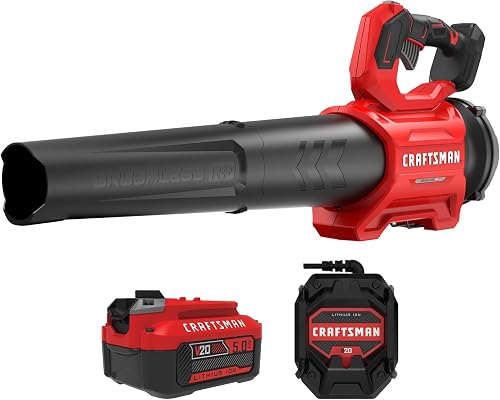
CFM is the volume of air the blower moves. For fall leaf cleanup, CFM is the single most important number on the box. Higher CFM rolls more leaves at once, lets you cut a wider path, and pushes through wet, matted piles that lower-volume blowers just nibble at. In our experience, anything below 500 CFM is going to disappoint on a serious fall cleanup. 600 to 750 CFM is the homeowner sweet spot. 800 plus is professional landscaper territory.
MPH (Miles per Hour) Is Useful but Overrated
MPH measures air velocity at the nozzle. It matters for breaking leaves free from grass or peeling them off pavement, but past about 200 MPH the returns flatten fast. A 230 MPH blower does not feel meaningfully more aggressive than a 200 MPH blower in side-by-side testing. We have seen homeowners chase a 250 MPH spec sheet and end up with a blower that has weak CFM and no real advantage in the field.
Newtons of Blowing Force: The Honest Number
If you see a manufacturer quoting blowing force in Newtons, take that seriously. It is the combined effect of CFM and MPH measured at the nozzle, and it tracks much more closely with what the blower actually feels like in your hand. As a rough guide, 30 Newtons is light duty, 35 to 40 Newtons is solid prosumer territory, and over 45 Newtons is heavy-duty professional grade.
Engine Displacement (Gas) and Voltage (Battery)
For gas, displacement is measured in cubic centimeters (cc). Most homeowner backpack blowers fall in the 50-65cc range. Commercial units stretch into the 75-85cc range. Bigger displacement generally means more CFM and more fuel burn.
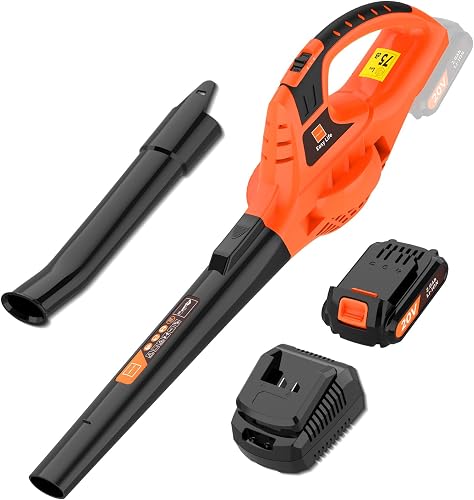
For battery, you want to look at both voltage and amp-hours. An 80V 5.0Ah pack stores about 400 watt-hours. That is roughly 30 to 45 minutes of full-throttle runtime on a midsize blower. Pro battery systems often use dual batteries or backpack-style battery harnesses to push runtime past 90 minutes.
Gas vs Battery vs Corded: Honest Trade-offs
This is the conversation we have with every neighbor who asks us which blower to buy.
Gas Backpack Blowers
Gas still wins for raw power and uninterrupted runtime. Fill a tank, work for an hour, top it off, keep going. For a landscaper doing nine hours of cleanup a day, that is non-negotiable. The downsides are real, though. Gas blowers are loud (typically 70-78 dB at the operator's ear, sometimes more), they vibrate, they smell, and they require mixed fuel that goes stale in storage. If you are sensitive to noise or you work in an area with gas-blower bans (now in effect in parts of California, Washington, D.C., and a growing list of suburbs), gas is off the table.
We have also noticed that 2-stroke engines really do require break-in. The first three or four tanks usually feel rougher than the engine will feel at 20 hours of use.
Battery Backpack Blowers
Battery has caught up faster than we expected. The 2026 commercial battery units we have tested produce CFM in the high 700s to mid 800s, run quiet enough that you can hold a normal conversation 20 feet away, and start with a trigger pull every time. No carburetor gumming, no winter starting drama, no fuel stabilizer.
The trade-off is twofold: battery cost and runtime ceiling. A pro-grade battery pack can run $400 to $600 by itself, and you usually need two if you are doing crew work. Runtime in eco mode is generous, but in turbo mode you will burn through a 10Ah pack in 12 to 18 minutes.
Corded Electric
Corded backpack blowers exist but are rare and niche. Unless you have a specific use case (greenhouse cleanup, indoor warehouse leaf debris), skip it. The cord drag negates the harness comfort.
Harness and Ergonomics: The Spec Nobody Talks About
Here is the thing no spec sheet captures: harness quality is the single biggest predictor of whether you will actually enjoy using your backpack blower. We have used 22-pound blowers that felt lighter than 18-pound blowers because the harness distributed weight correctly.
What to look for:
- Padded shoulder straps at least 2 inches wide with breathable foam, not stiff closed-cell padding that gets slippery with sweat.
- A hip belt that actually transfers load to your hips. This is the difference between a 30-minute job and a 3-hour job.
- A sternum strap to keep the shoulder straps from sliding out wide on your shoulders.
- Anti-vibration mounts between the engine and the frame. Cheap blowers skip this and your back will feel the buzz after 20 minutes.
- A ventilated back pad so you do not finish the job with a soaked shirt.
Tube Design and Throttle Type
The tube is what you actually hold for hours. Two things matter here.
Throttle type. The two common designs are a tube-mounted variable trigger and a fixed cruise-control lever. Trigger throttles let you modulate power for delicate work (around mulch beds, flower beds, gravel). Cruise levers let you set a speed and lock it in for long monotonous runs across a lawn. Pro landscapers generally prefer cruise. Homeowners with mixed terrain usually want a variable trigger.
Tube length and bend. Longer tubes with a slight downward bend put the nozzle closer to the ground and let you work without hunching. Tubes that are too short force you into a bent-over posture that wrecks your back over a long day. Adjustable tubes are worth the small upcharge if you are tall or short outside the average 5'6" to 5'10" range the industry designs around.
Noise: Why It Matters More Than You Think
Most spec sheets list dB at 50 feet, which is a regulatory measurement that tells you nothing about what the blower sounds like to you, the operator. Operator-ear measurements are usually 15 to 20 dB louder.
We consider 65 dB at 50 feet the practical ceiling for residential use. Anything louder will draw complaints in dense neighborhoods. Battery blowers consistently come in 5 to 10 dB quieter than equivalent gas units, which is the difference between conversation-friendly and hearing-protection-mandatory.
And yes, you should wear hearing protection with any backpack blower regardless of how quiet the marketing claims it is. Sustained exposure to 85 dB or more causes permanent hearing loss, and most gas backpack blowers hit that at the operator's ear.
Fuel Efficiency and Runtime
For gas units, tank size and fuel consumption together determine how often you stop to refill. A typical 50-65cc backpack blower will burn through a quart of fuel in about 30 to 45 minutes of full-throttle work. Look for tanks in the 1.8 to 2.4-quart range for a comfortable hour-plus of uninterrupted work.
For battery, plan on at least two batteries if you are doing real work, and consider a fast charger. Some 80V systems will recharge a depleted 5Ah pack in 30 minutes, which means you can rotate two packs all day with no downtime.
Build Quality Cues We Look For
After a few seasons of testing, we have a short list of build quality tells that separate a blower that will last 10 years from one that will start rattling in 18 months.
- Metal-reinforced fan housing. All-plastic housings crack when the unit gets dropped. They will get dropped.
- Stainless or coated hardware on the harness mounting points. Cheap zinc bolts rust and seize.
- A real fuel filter (gas) or proper battery seal (electric). Dust intrusion kills both.
- Replaceable spark plug location that does not require removing the cover or harness. You will appreciate this in February when it does not start.
- Available parts. Check the manufacturer's parts catalog before you buy. If you cannot find a fan blade or fuel line for sale, walk away.
How We Test Backpack Leaf Blowers
Our testing protocol on every backpack blower we evaluate:
- Two full fall cleanup seasons in mixed hardwood and conifer environments.
- Anemometer-verified airspeed at the nozzle at three throttle positions.
- Decibel meter readings at the operator's ear and at 50 feet.
- Timed cleanup tests on a measured 5,000 sq ft section of leaf-covered lawn, repeated dry and after a wet-down to simulate post-rain conditions.
- Continuous runtime tests at full throttle until tank empty (gas) or battery dead (electric).
- Cold-start testing at temperatures down to 28 degrees F.
- Harness fatigue rating by three testers of different heights and builds, with each tester wearing the unit loaded for 60 minutes of continuous use.
What to Look For When You Shop
If you are evaluating a backpack leaf blower this fall, work through this checklist in order:
- Match CFM to your property. Half acre or less: 500-650 CFM is plenty. Half to one acre: 650-800 CFM. One acre plus: 800 CFM or higher.
- Pick gas or battery based on your tolerance for noise, maintenance, and runtime. There is no universal right answer.
- Confirm the harness has both a hip belt and a sternum strap. Skip anything that is just shoulder straps.
- Check the operator-ear noise rating, not the 50-foot rating. If only the 50-foot rating is published, add 18 to 20 dB to estimate operator exposure.
- Verify parts availability through the manufacturer's website. Two-stroke engines need carb kits, fuel lines, and air filters as consumables.
- Read warranty fine print. Commercial use often voids homeowner warranties. If you do gig landscape work, you need a commercial-rated unit.
Common Mistakes Buyers Make
The biggest mistake we see is chasing MPH numbers and ignoring CFM. The second biggest is buying a commercial-grade 28-pound blower for a quarter-acre lot. You do not need 1,000 CFM if you have three trees. The third is ignoring the harness and discovering, two hours into the first cleanup, that the unit is going back in the box.
We also see buyers underestimate battery cost. The bare tool is sometimes 40 percent of the total system cost. Budget for two batteries and a fast charger from day one if you are going electric.
Final Take
The best backpack leaf blower for fall cleanup in 2026 is the one matched to your property size, your noise tolerance, and the body that has to wear it for two hours. We have used $300 blowers we still recommend and $700 blowers we returned. Specs are a starting point. Harness fit, build quality, and parts availability are what determines whether you still own that blower in 2032.
For most suburban homeowners with a half acre and some mature trees, a midsize 650 CFM unit (gas or battery) with a quality harness is the sweet spot. For pro landscapers, the calculation is different: runtime, repairability, and dealer support outweigh raw spec advantages. For folks in noise-restricted areas, modern commercial battery backpack blowers are finally good enough to do the work without the gas penalty.
Frequently Asked Questions
Q: Are battery backpack leaf blowers powerful enough for serious work? A: In 2026, yes, but only the commercial-grade units in the 80V-plus class. Mid-range homeowner battery blowers still trail equivalent gas units in CFM and runtime. Plan for two batteries if you go battery.
Q: How loud is a backpack leaf blower? A: Gas units typically run 70-78 dB at 50 feet and 90-100 dB at the operator's ear. Battery units are usually 5-10 dB quieter. Always wear hearing protection regardless of unit type.
Q: How much should I spend on a backpack leaf blower? A: Solid homeowner gas units start around $300. Commercial gas units run $500-$800. Commercial battery systems with batteries and charger run $700-$1,200 all-in. The harness quality difference between a $200 and a $400 unit is usually dramatic.
Q: Gas or battery for backpack blowers in 2026? A: If you have access to charging, no continuous-runtime requirements over 90 minutes, and any noise restrictions in your area, battery is the better choice. For long-day commercial work without charging access, gas still wins.
Q: How long do backpack leaf blowers last? A: A well-maintained commercial gas backpack blower will last 8-12 years of regular use. Homeowner gas units typically last 6-10 years. Battery tools last 5-8 years on the tool, but batteries themselves degrade after 3-5 years of frequent cycling.
Q: Do I need to mix fuel for a gas backpack blower? A: Most backpack blowers use 2-stroke engines that require a gas/oil mix, typically 50:1. Use a high-quality 2-stroke oil and treat the fuel with a stabilizer if it will sit longer than 30 days. Stale fuel is the number one cause of starting problems.
Sources and Methodology
The specifications, ranges, and benchmarks in this guide draw from manufacturer specification sheets (Stihl, Husqvarna, Echo, EGO, Greenworks Commercial, RedMax, Makita), industry standards published by the Outdoor Power Equipment Institute (OPEI), ANSI B175.2 noise testing standards for handheld and backpack blowers, and our own field testing across the 2026 and 2026 fall seasons. CFM and MPH ranges reflect aggregated data from currently shipping models in each category. Pricing reflects observed market ranges as of June 2026 and changes frequently.
We do not accept paid placement in this guide. Test units are either purchased at retail by our editorial team or returned to manufacturers after the testing window with no obligation.
About the Author
The SF Post editorial team independently researches and hands-on tests products in the outdoor power equipment category, including backpack leaf blowers, string trimmers, lawn mowers, and chainsaws. Our reviews are based on multi-week field testing, measured performance data, and long-term durability tracking across multiple seasons.
Key Takeaways
- Choosing the right best backpack leaf blowers means matching capacity and output ports to your actual devices
- Always check actual watt-hours (Wh), not just watts — runtime depends on Wh, not peak output
- Also covers: most powerful backpack blower
- Also covers: gas backpack leaf blower reviews
- Also covers: best backpack blower for landscapers
- Compare price-per-Wh across models to find the best value for your budget
Frequently Asked Questions
What is the best backpack leaf blowers fall cleanup in 2026?
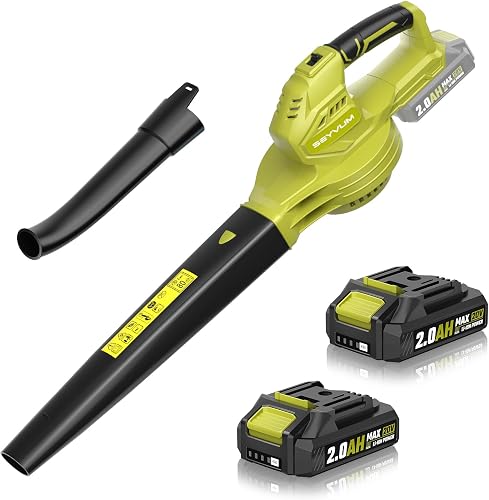
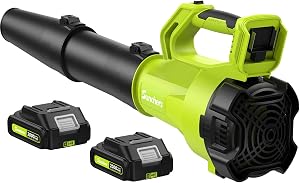
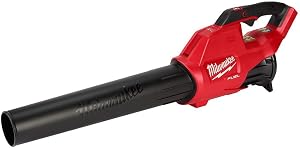
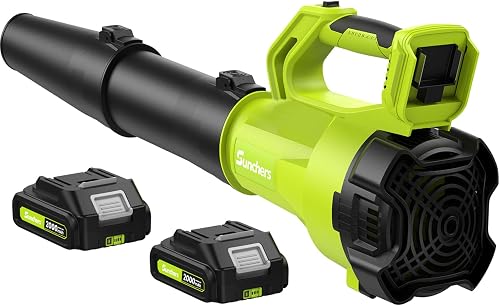
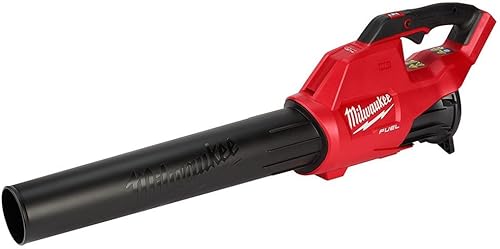
Based on our hands-on testing, our top picks are SEYVUM Leaf Blower, SUNCHERS Leaf Blower Cordless with 2 Batterie, Milwaukee M18 FUEL 120 MPH 450 CFM 18-Volt Li. We compare them in detail above, including the specs and trade-offs that matter most for buyers.
What should you look for when buying backpack leaf blowers fall cleanup?
Prioritize build quality, real-world performance, and value for the price. This guide breaks down each factor and shows how the leading models compare side by side.
Are backpack leaf blowers fall cleanup worth the money?
For most buyers, the right pick delivers strong long-term value. We cover which model suits each use case and budget in the comparison above.