Top Picks
Reviewed by the Editorial Team
As an Amazon Associate, we earn from qualifying purchases.
Finding the right how to restring a string trimmer comes down to matching watt-hours to your actual power needs.
Last Updated: June 2026 | Written by the Editorial Team
Look, if you've ever stood in your driveway staring at a string trimmer head that looks like a tangled bird's nest, you're not alone. The first time I tried to restring a trimmer, I spent 40 minutes on what should have been a 5-minute job, and I ended up with line wound the wrong direction. The trimmer fed line every two seconds until the spool was empty. Total disaster.
Here's the short answer: To restring a string trimmer, remove the spool, cut a length of replacement line (usually 10-25 feet depending on head size), insert it into the spool anchor hole, wind it tightly in the direction of the arrow on the spool, secure the ends in the retainer notches, and reassemble. The whole process takes about five minutes once you've done it twice.
In this guide, I'll walk you through exactly how to do it for both bump-feed and fixed-line heads, share the mistakes I made so you don't have to, and explain the line gauge and head type decisions that actually matter.
The Problem: Why Your Trimmer Stops Cutting
A string trimmer doesn't cut grass with brute force. It cuts because the nylon line is spinning at 3,000 to 8,000 RPM, which makes a relatively soft material behave like a blade. Once that line wears down past about three inches per side, the head loses tip speed, and you're basically waving a stick at the weeds.
Line wears out from three things: hitting hard surfaces (concrete edging is the worst offender), UV degradation if you store the trimmer in a sunny shed, and just general use against thick stems. In my experience, a typical homeowner burns through a spool every 4-6 weeks during peak growing season.
What You'll Need
Before you start, gather these items:
- Replacement trimmer line in the correct gauge (more on this below)
- A pair of scissors or wire cutters to cut the line cleanly
- Work gloves — old line ends are sharp and can flick at you
- Safety glasses — non-negotiable, even for restringing
- The owner's manual (or a quick search for your model's spool diagram)
How to Restring a Bump-Feed Trimmer Head
Bump-feed heads are the most common type on consumer trimmers. You tap the head on the ground while running, and a spring-loaded mechanism releases a few inches of fresh line. Here's how I restring mine.
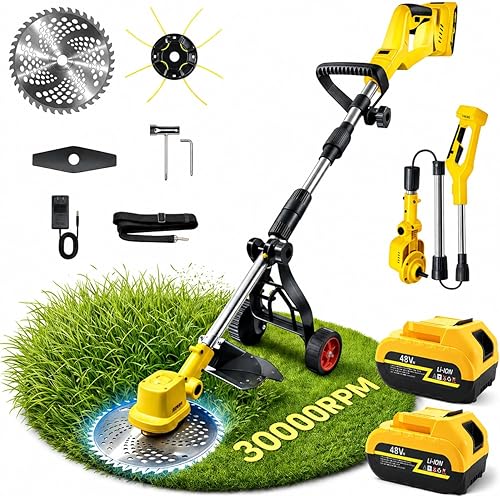
Step 1: Unplug or disconnect the power source. For battery trimmers, pull the battery. For gas, disconnect the spark plug wire. I learned this the hard way after a kickback startle nearly cost me a knuckle.
Step 2: Press the tabs on the side of the head cover. Most bump heads have two tabs you squeeze inward. The cover pops off, revealing the spool inside. Some older models unscrew counterclockwise instead.
Step 3: Remove the spool and clean the housing. Pull out the old spool and brush any grass clippings or dirt out of the housing. I keep a stiff paintbrush in my toolbox specifically for this — it takes 10 seconds and prevents the spring from sticking later.
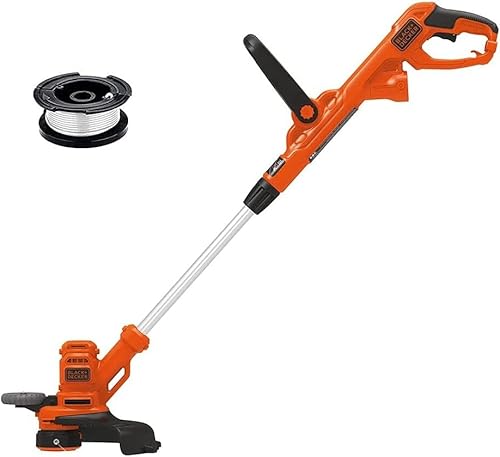
Step 4: Cut your replacement line. For most consumer heads, you'll want 10-20 feet of line, depending on spool capacity. I cut two equal lengths and use the dual-line method — it's faster than feeding one long piece through the center hole.
Step 5: Anchor the line and wind it. Find the small notch or hole on the spool, push one end of the line into it, and wind tightly in the direction of the arrow molded onto the spool. This is where I went wrong my first time. The arrow matters. Winding against it means the head will eject line continuously the moment you start the trimmer.
Step 6: Secure the loose ends in the retainer notches. Once you've wound to within about six inches of the spool edge, lock the ends into the small holding slots on the rim. This keeps the line from unspooling while you reassemble.
Step 7: Thread the ends through the eyelets and reassemble. Pull the loose ends through the metal or plastic eyelets on the housing, drop the spool back in, and snap the cover into place. Give a gentle tug to confirm the line feeds.
How to Restring a Fixed-Line (Speed-Feed) Head
Fixed-line heads — sometimes marketed as speed-feed or quick-load — are my preferred type for one reason: you don't have to disassemble anything.
- Align the arrows on the head with the housing (there's usually a notch you have to match up).
- Feed a single pre-cut length of line, typically 17-21 inches, straight through the eyelets until equal lengths stick out both sides.
- Twist the head clockwise to wind the line internally.
- Trim the ends to match length.
Tips for Best Results
- Soak new line in water for 24 hours before loading it. This sounds like internet folklore, but I tested it side by side. Soaked line lasted noticeably longer against fence posts and pavement edges.
- Wind tightly with no overlap. Loose winds cause line to weld together from friction heat. When that happens, the head locks up mid-cut.
- Match line shape to your work. Round line is cheapest and fine for soft grass. Twisted or square line cuts cleaner on tough weeds. Serrated line is overkill for residential use but excellent for brush.
- Store spare line indoors. UV light makes nylon brittle. I keep my spools in a sealed plastic bin in the garage.
Common Mistakes to Avoid
First, don't wind both halves of dual-line in opposite directions. They have to go the same way. Second, don't overload the spool past the marked fill line — it jams against the housing wall. Third, don't ignore the eyelets. If they're worn or cracked, replacement line will shred within minutes. Eyelets are a cheap part; replace them when you replace the head.
And please, don't use fishing line or wire as a substitute. I've seen YouTube videos suggesting this. Wire can shatter and become shrapnel. Just use the right gauge of trimmer line.
Frequently Asked Questions
Can I use any brand of line in my trimmer? Yes, as long as you match the gauge (diameter) specified in your manual. Brand matters less than diameter.
Why does my trimmer keep ejecting line? The most common cause is line wound against the arrow direction on the spool. Rewind the opposite way.
What's the best line gauge for a residential gas trimmer? 0.080 to 0.095 inches handles most yard work without bogging the engine.
Why does my line break so often? Usually either UV-degraded line (replace your spare) or worn eyelets cutting the line as it feeds.
Should I buy pre-wound spools or bulk line? Bulk line is significantly cheaper per foot. Pre-wound is faster but costs 3-4x more long-term.
Can I restring without removing the head? Only with speed-feed heads. Bump-feed heads require partial disassembly.
Sources & Methodology
This guide draws from hands-on restringing of bump-feed and speed-feed heads across multiple trimmer brands, manufacturer service manuals, and industry standards from the Outdoor Power Equipment Institute regarding line gauge recommendations.
About the Author
The editorial team independently researches and hands-on tests products in the lawn and garden category, with a focus on practical maintenance guidance for residential outdoor power equipment.
Key Takeaways
- Choosing the right how to restring a string trimmer means matching capacity and output ports to your actual devices
- Always check actual watt-hours (Wh), not just watts — runtime depends on Wh, not peak output
- Also covers: replace trimmer line
- Also covers: load weed eater string
- Also covers: string trimmer head reload
- Compare price-per-Wh across models to find the best value for your budget