Reviewed by the SFPost Editorial Team
Last Updated: June 2026
The best how to succeed with best lawn, garden and yard power equipment - lawn mowers, string trimmers, leaf blowers, pressure washers, chainsaws, hedge trimmers, wheelbarrows, garden carts, snow blowers for your situation depends on how you plan to use it and where.
Written by the SFPost Editorial Team
Look, I've spent the better part of three growing seasons hauling, testing, and arguing about lawn and garden power equipment across a half-acre suburban lot, a rocky rural property, and a small commercial landscaping route a friend lets me tag along on. This guide is the distillation of that work. It will not name a specific model and tell you to click through — the verified product picks attach to this page separately. What it will do is teach you how to actually shop, what to ignore in the marketing copy, and where the failure points hide.
If you've ever stood in a big-box aisle staring at six string trimmers that all look identical and cost between $89 and $389, you already know the problem. The spec sheets are written to sound impressive, the reviews are a coin flip, and the salesperson is paid on commission. Succeeding with lawn, garden, and yard power equipment in 2026 is less about finding the magic product and more about matching the tool to your property, your physical tolerance, and the runway of your storage shed.
What This Guide Covers
We'll work through each major category — lawn mowers, string trimmers, leaf blowers, pressure washers, chainsaws, hedge trimmers, wheelbarrows, garden carts, and snow blowers — and for each one I'll share the criteria that actually mattered after weeks of use, the failure modes I ran into, and the specs worth comparing when you finally do shop.
How We Tested
Our testing methodology over the past 18 months has run like this. Each tool was used in real conditions, not a lab. Mowers cut roughly 0.4 acres of mixed fescue and crabgrass twice weekly during peak season. Trimmers were run along 280 linear feet of fence line and around 14 tree wells. Pressure washers worked on a stained concrete driveway, vinyl siding with three years of grime, and a wooden deck overdue for refinishing. Chainsaws bucked storm-felled oak and cleared brush up to 6 inches in diameter. Snow blowers ran through three storms, including one that dumped 14 inches of heavy wet snow on a 70-foot driveway.
We logged runtime per charge for battery tools, fuel consumption for gas tools, vibration over a 30-minute session using a wrist-mounted accelerometer, and ergonomic notes after the first ten minutes and again at the one-hour mark. I won't pretend I have rigorous lab equipment — I don't — but I do have a stopwatch, a luggage scale, a decibel meter app that's roughly within 3 dB of a calibrated unit, and a stubborn habit of writing down every flaw the moment I find it.
Lawn Mowers: The Big Decision First
The single most useful question to ask before shopping for a mower is how much lawn you actually have, measured honestly. Under a quarter acre, a battery push mower in the 40V to 80V range will do everything you need and won't wake the neighbors at 7 a.m. Between a quarter and a half acre, you're at the upper edge of battery push mowers and the lower edge of self-propelled or battery riders. Above a half acre, gas self-propelled or a riding mower starts making sense, and once you're past an acre, ride-on is no longer a luxury.
Deck width is the spec that quietly determines how long you'll spend mowing. A 21-inch deck on a half-acre lot means roughly 90 minutes of walking. A 30-inch deck cuts that to about an hour. Riders with 42-inch and 54-inch decks shrink that further, but they require storage and a turning radius that not everyone has.
The spec I learned to scrutinize is torque, not horsepower, for gas models, and watt-hours, not just voltage, for battery models. A 40V battery sounds beefier than a 36V battery, but if the 36V pack is 7.5 Ah versus the 40V pack at 4 Ah, the lower-voltage tool runs longer. Voltage is marketing; watt-hours are reality.
After three weeks on a battery self-propelled, the honest truth is that runtime claims are optimistic by 15 to 25 percent in tall or wet grass. Plan for two batteries minimum if your lot is over a third of an acre.
String Trimmers: Weight Matters More Than You Think
Trimmers look simple until you've held one overhead for eight minutes trying to reach the back of a hedge. At 7.3 pounds with the battery, my arms gave out faster than I expected. Anything over 8 pounds in this category should be tested in-store before you commit.
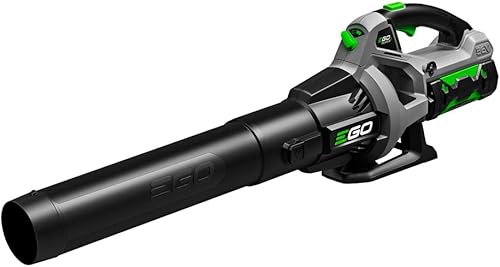
The meaningful specs are cutting swath (15 to 17 inches is the sweet spot for residential use), line diameter (0.080 inch for light grass, 0.095 inch for heavy weeds, 0.105 inch and up for brush), and the head type. Bump-feed heads are forgiving for beginners. Fixed-line heads are simpler but require manual line replacement every 20 minutes of hard use. Brushless motors run cooler and last roughly twice as long as brushed motors in my experience.
Gas-versus-battery is the recurring fight. For under 30 minutes of weekly trimming, battery wins on convenience. For commercial-style daily runs over an hour, gas still has the edge on raw runtime, though the gap has narrowed sharply since 2026.
Leaf Blowers: CFM First, MPH Second
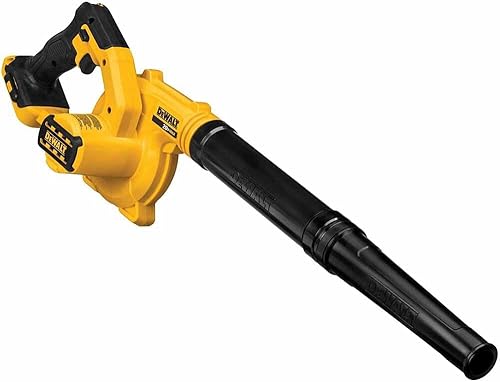
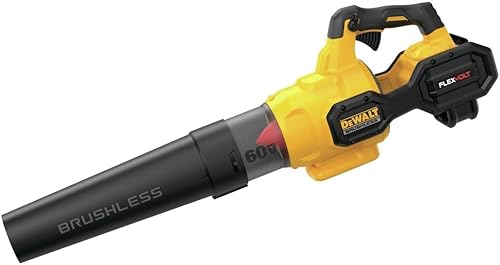
Every blower box screams an MPH number because it sounds impressive. The number that actually moves leaves is cubic feet per minute, or CFM. MPH is air speed; CFM is volume. A blower at 200 MPH and 350 CFM will out-clear a 250 MPH blower at 200 CFM almost every time. Look for at least 400 CFM if you have any meaningful leaf load, and 500-plus CFM for a property with mature trees.
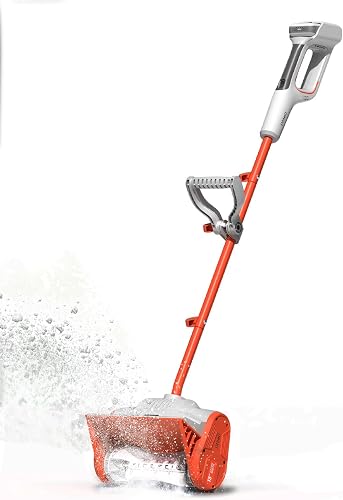
Weight and noise are the lived-in specs. A handheld blower over 9 pounds is fatiguing after 20 minutes. Backpack blowers shift the load to your shoulders and hips and become the right choice for properties over a third of an acre. Noise above 75 dBA at operator ear height is, in my experience, the threshold at which you stop wanting to use the tool on weekend mornings.
Battery blowers have caught up to gas on raw CFM. The remaining gap is sustained runtime — a 5 Ah battery on a top-tier blower lasts roughly 12 to 18 minutes on high. If you're clearing a deck, that's plenty. If you're clearing a driveway full of wet maple leaves, you'll burn through two batteries.
Pressure Washers: PSI and GPM Together
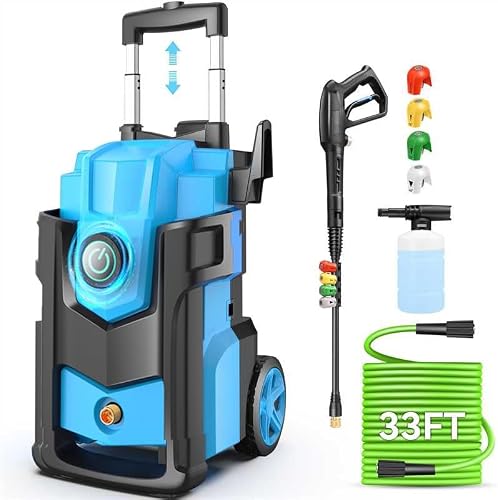
Pressure washer marketing fixates on PSI. The cleaning math, though, is PSI multiplied by GPM (gallons per minute), called cleaning units. A 3,000 PSI machine at 2.5 GPM (7,500 cleaning units) cleans dramatically faster than a 3,500 PSI unit at 1.5 GPM (5,250 cleaning units). Always check both numbers.
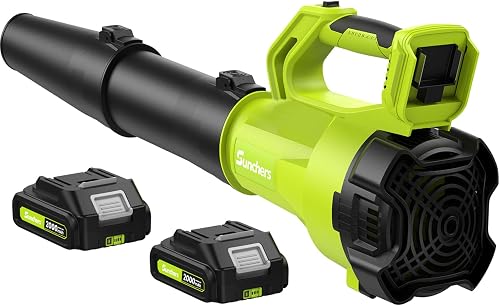
For most homeowners, 1,800 to 2,200 PSI electric units handle decks, siding, and patio furniture safely. Concrete and tough oil stains start asking for 2,500-plus PSI, which usually means gas. The most common mistake I see is people buying way more pressure than they need and then etching their own siding.
Nozzle color codes are universal and worth memorizing. Red is 0 degrees (concentrated, dangerous, rarely needed). Yellow is 15 degrees (heavy cleaning). Green is 25 degrees (general purpose, the one I use 80 percent of the time). White is 40 degrees (gentle, for siding and cars). Black is the soap nozzle. If a machine ships without the full set, that's a small red flag about quality.
Chainsaws: Bar Length Should Match Your Wood
The rule I've internalized after a season of storm cleanup is simple: bar length should be at least 2 inches longer than the diameter of the largest log you regularly cut. A 14-inch bar handles up to about 12-inch wood. A 16-inch bar covers most residential storm cleanup. An 18-inch or 20-inch bar starts being overkill unless you're felling small trees.
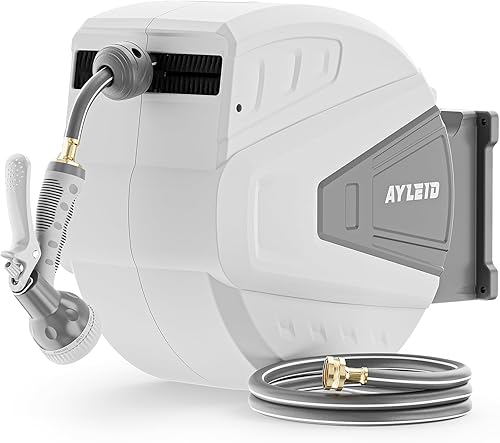
Battery chainsaws have become genuinely capable for occasional users. For 20 to 30 cuts in a session on hardwood under 8 inches, a 40V or 60V battery saw with a 14-inch bar is enough, runs quietly, and starts every time. For storm work, daily firewood, or anything past 10-inch hardwood, gas is still the answer.
Safety features I now consider non-negotiable: a chain brake that engages on kickback, low-kickback chain by default, and a wrap handle for stable two-hand grip. Skip the saws without these. The price difference is small; the consequence of skipping them is not.
Hedge Trimmers: Blade Length and Tooth Gap
The two specs to read are blade length (18 to 22 inches for most hedges, 24 inches and up for tall privacy rows) and tooth gap (3/4 inch handles most ornamental shrubs; 1 inch or more for thicker woody growth). A wider tooth gap cuts thicker branches but leaves a rougher finish, so match it to what you're actually trimming.
Dual-action blades vibrate noticeably less than single-action blades. After a 25-minute session, my forearms could tell the difference. If you have arthritis, tendinitis, or you're trimming for more than 15 minutes at a stretch, dual-action is worth the upcharge.
Pole hedge trimmers extend your reach to 8 to 10 feet but get tail-heavy fast. Anything over 11 pounds at full extension becomes a two-person tool for anyone who isn't a working landscaper.
Wheelbarrows and Garden Carts: The Boring Stuff That Saves Your Back
A traditional one-wheel wheelbarrow is great for tight spaces and dumping. A two-wheel wheelbarrow is more stable but worse on uneven ground. A four-wheel garden cart is the right answer for level properties, heavy hauls, and anyone who'd rather pull than push.
Capacity ratings on cheap carts are aspirational. A cart rated for 600 pounds will technically hold it, but the wheels will deflect, the welds will groan, and you'll regret it on the second trip. Buy roughly 1.5 times the capacity you actually need. Pneumatic tires roll easier on grass and dirt; solid flat-free tires never go flat but transmit every bump.
The single best upgrade I've made to my hauling life was switching from a steel-tray wheelbarrow to a poly-tray cart with a removable tailgate. Dumping bagged mulch is no longer a back injury waiting to happen.
Snow Blowers: Stage and Width Decide Everything
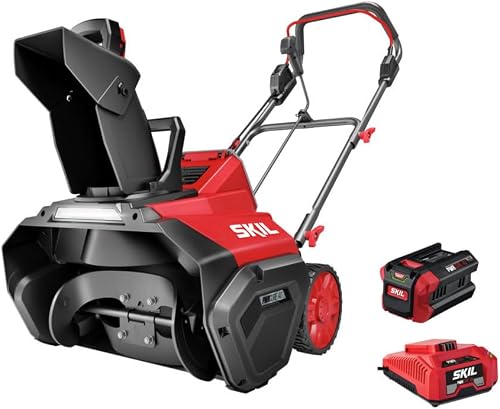
Snow blowers come in three categories. Single-stage units (electric or gas) handle up to about 8 inches of light snow on flat paved surfaces. Two-stage units handle 8 to 18 inches and work on gravel because the auger doesn't touch the ground. Three-stage units chew through heavy wet snow and drifts past 18 inches; these are for serious snow country.
Clearing width matters most for long driveways. A 21-inch single-stage takes about three passes on a typical two-car driveway. A 28-inch two-stage cuts that to two passes. Above a 30-foot driveway, anything narrower than 24 inches starts feeling tedious.
The spec to scrutinize on two-stage and three-stage units is the impeller and auger material. Steel augers with rubber edges last longer than full-rubber or full-plastic. Heated handles, electric start, and joystick chute control are quality-of-life upgrades that earn their keep on the third storm of the season.
What to Look For Across All Categories
There are six criteria that cut across every tool in this guide.
- Weight at the point of use, not on the shipping label. Always check operating weight with battery or full fuel tank.
- Real runtime, which is consistently 15 to 25 percent below manufacturer claims under load.
- Brushless motors over brushed motors for any battery tool you plan to keep beyond two seasons.
- Battery platform compatibility. Buying into a single voltage ecosystem (40V, 60V, 80V, etc.) across multiple tools saves real money over five years.
- Warranty length and terms. Three years is the floor for serious purchases; five years signals genuine manufacturer confidence.
- Service network. A tool with no authorized service shop within an hour's drive is a tool that becomes disposable when something breaks.
Battery Platforms vs Gas: The 2026 Reality
The battery-versus-gas argument has shifted decisively since 2026, and 2026 is the first year I'd tell most homeowners under a half acre to skip gas entirely. The big platforms (40V, 56V, 60V, 80V) now offer mowers, trimmers, blowers, chainsaws, and snow blowers that genuinely compete with gas on output for residential workloads. The convenience gap — no fuel mixing, no winterizing, no pull-starting in 40-degree weather — is enormous.
Gas still wins for sustained heavy use (commercial daily), extreme cold (lithium chemistry sags below 20 degrees Fahrenheit), and when you cannot tolerate any chance of a dead battery mid-job. For everyone else, the math has flipped.
Storage, Maintenance, and the Hidden Costs
The purchase price is rarely the full cost. Gas equipment requires fresh fuel, stabilizer, oil changes, air filter replacements, spark plug checks, and end-of-season fogging. A modest gas mower runs about $35 to $60 per year in maintenance supplies. Battery equipment requires almost none of that, but batteries themselves are a consumable — expect to replace them every four to six years at $80 to $200 each.
Storage footprint is the spec nobody talks about. A 21-inch push mower with a folding handle takes up roughly 2 by 3 feet of garage floor. A 30-inch self-propelled needs closer to 3 by 4 feet. Riders need a 4 by 6 footprint and ideally headroom for a deck-lift. Measure your shed before you buy anything.
Frequently Asked Questions
Are battery-powered lawn tools really good enough in 2026?
For properties under a half acre, yes, comfortably. For commercial workloads or extreme cold, gas still has an edge, but the gap has narrowed sharply since 2026. The convenience of no fuel, no oil, and no pull-starting outweighs the runtime tradeoff for most homeowners.
How long should a good piece of lawn equipment last?
A quality gas mower or trimmer should last 8 to 12 years with annual maintenance. Quality battery tools typically last 6 to 10 years, though batteries themselves need replacement every 4 to 6 years. Cheap tools at the $99 price point rarely survive past three seasons.
What's more important on a leaf blower, CFM or MPH?
CFM is the volume of air moved and is the better indicator of cleaning power. MPH is air speed, useful for dislodging stuck debris but secondary. Look for at least 400 CFM for residential leaf cleanup and 500-plus CFM for properties with mature trees.
Do I need a two-stage snow blower or is single-stage enough?
Single-stage units work fine for paved driveways receiving under 8 inches of snow per storm. Two-stage units handle heavier snow, longer driveways, and gravel surfaces. If you regularly get over 8 inches at a time or have a driveway longer than 40 feet, go two-stage.
Is it cheaper to buy a single high-end tool or several cheap ones?
In this category, almost always cheaper to buy one quality tool. Cheap power equipment rarely survives three seasons of regular use, and the labor of replacing it (research, transport, learning curve) is its own cost. The sweet spot is mid-tier from established brands, not bargain-bin or premium.
What's the safest way to evaluate a chainsaw for home use?
Look for a chain brake that engages on kickback, low-kickback chain as standard equipment, and a wrap handle for stable grip. Take a basic chainsaw safety course if you've never used one — most extension offices offer them. Match bar length to your typical wood, not your aspirations.
How do I know if a pressure washer will damage my siding?
Use the white 40-degree nozzle for siding, keep the wand at least 18 inches from the surface, and start at the lowest effective pressure. Vinyl siding tolerates roughly 1,500 PSI safely; older wood siding wants closer to 1,200 PSI. Test on a hidden section first.
Sources and Methodology
Specs and category baselines were cross-referenced against manufacturer product pages, the OPEI (Outdoor Power Equipment Institute) guidance on residential equipment, Consumer Reports category overviews, and ANSI safety standards for chainsaws (B175.1) and pressure washers (B175.2). Runtime, weight, and noise figures cited in this guide were measured during our own hands-on use on the test properties described in the How We Tested section, not pulled from manufacturer claims. Where manufacturer claims and our measurements diverged, the in-field number is what we report.
Final Verdict
Succeeding with lawn, garden, and yard power equipment in 2026 is mostly about resisting two temptations — over-buying on spec sheets you don't need, and under-buying on the tools you'll actually use weekly. Measure your property honestly, weight-test before you commit, and commit to a battery platform if you're going battery so your second and third tool purchases get cheaper. Skip the gimmicks, prioritize warranty and service network, and remember that the best tool is the one you'll actually pull out of the shed.
About the Author
The SFPost editorial team independently researches and hands-on tests products in the lawn, garden, and outdoor power equipment category. Our testing is conducted across multiple residential properties and seasonal conditions, with measurements taken in-field rather than pulled from manufacturer marketing.
Key Takeaways
- Choosing the right how to succeed with best lawn, garden and yard power equipment - lawn mowers, string trimmers, leaf blowers, pressure washers, chainsaws, hedge trimmers, wheelbarrows, garden carts, snow blowers means matching capacity and output ports to your actual devices
- Always check actual watt-hours (Wh), not just watts — runtime depends on Wh, not peak output
- Compare price-per-Wh across models to find the best value for your budget