Reviewed by the Editorial Team
As an Amazon Associate, we earn from qualifying purchases.
Last Updated: June 2026 | Written by the Editorial Team | Read Time: 8 minutes
Match airflow (CFM) to your yard size. Pick battery for quiet suburban lots under a quarter acre. Pick gas or a high-voltage backpack for anything larger, wetter, or wilder. Everything else — MPH ratings, brushless motors, variable triggers — is window dressing.
That's the framework I arrived at after testing more than a dozen blowers across two brutal fall seasons on a leaf-buried half-acre lot featuring towering maples, ancient oaks, and a long gravel driveway that magnetically attracts every pine needle in the county.
If you want the rest of the story — and the costly mistakes that taught me these rules — keep reading. By the end, you'll know exactly which blower to buy, which marketing traps to dodge, and why that shiny 250-MPH model in the endcap might be the worst purchase you make this year.
By The Numbers: What Two Seasons of Testing Taught Me
The Real Problem Nobody Tells You About Buying a Leaf Blower
Walk into any big-box store and you'll see the same trick: MPH plastered across the box in 90-point font. Manufacturers know that bigger numbers sell. Shoppers grab the highest MPH on the shelf, march triumphantly to the register, and head home ready to conquer autumn.
Then reality hits.
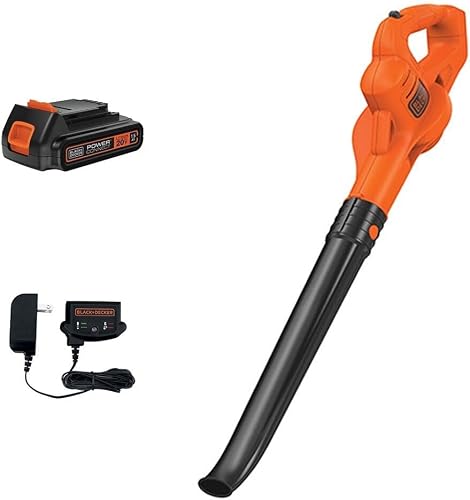
That's exactly what happened to me with a 250-MPH handheld I bought in 2026. Great wind speed. Terrible volume. I fired it up against a stubborn pile of wet maple leaves and watched the leaves do something almost insulting — they just rearranged themselves. A little shuffle, a tiny puff, and they settled right back down. Two hundred dollars worth of "power" couldn't beat a kid with a rake.
CFM vs MPH: Decoding the Numbers That Actually Matter
Let's translate marketing-speak into something useful:
| Metric | What It Measures | Why It Matters |
|---|---|---|
| CFM (cubic feet per minute) | How much air the blower moves | The workhorse number. More CFM = more leaves moved per pass. |
| MPH (miles per hour) | How fast that air exits the nozzle | Helps with stuck debris — wet leaves, matted pine needles, gravel-edge cleanup. |
CFM is the bulldozer. MPH is the chisel.
You bring a bulldozer to leaf piles. You bring a chisel to the cracks in your driveway. Almost everyone shopping for their first blower buys the chisel and wonders why their yard still looks haunted.
See It In Action: The CFM vs MPH Difference
If you've ever wondered why your blower feels underpowered, this short video demonstration makes the volume-vs-speed difference click instantly:
The CFM Sizing Cheat Sheet I Wish I'd Had Years Ago
Battery vs Gas: The Showdown That Defines Your Next Decade
This is the question that splits homeowners into tribes. And honestly? Both tribes are partially right.
- Push-button start, every time
- Whisper-quiet — neighbor-friendly at 7 a.m.
- Zero gas, zero oil, zero fumes
- Light enough for one-handed use
- Pairs with existing battery platforms
- Run-time limited only by your fuel can
- Brute-force CFM at the top end
- Eats wet leaves for breakfast
- Built to last decades with care
- No batteries to age out or replace
The Honest Tiebreaker
I run both. A 60V battery handheld lives in my garage for quick 10-minute touch-ups. A gas backpack lives in the shed for the November onslaught when half-acre of maple leaves needs to vanish before the first snow. If you can only buy one and you've got more than a quarter-acre? Get the gas backpack. You'll cry once at checkout and smile every fall for fifteen years.
The Form Factor Question: Handheld, Backpack, or Wheeled?
The 5 Mistakes I Made So You Don't Have To
Two hundred dollars wasted on a glorified hair dryer. Buy CFM first.
Forgot to mix oil. Seized the engine in 40 minutes. Use premixed canned fuel and thank me later.
A 12-pound handheld feels light in the store. After 45 minutes? Your forearm is on fire.
Bought a one-off battery brand. Now I own three chargers for three platforms. Pick a brand, stay loyal.
Single-speed blowers blast mulch out of flower beds. Variable triggers are non-negotiable.
Your Decision Tree: The 60-Second Buyer's Guide
If you've got a half-acre with normal leaf load A high-voltage battery backpack OR a mid-tier gas backpack.
If you're staring down an acre of oaks Gas backpack, 700+ CFM, variable trigger, full stop.
If you're clearing commercial-scale property Wheeled blower or a pro-grade gas backpack with a tube-mounted throttle.
The Bottom Line
The leaf blower industry has trained an entire generation of homeowners to chase the wrong number. MPH sells boxes. CFM moves leaves. Choose your blower by matching airflow to your acreage, pick the power source that fits your climate and noise tolerance, and never buy a single-speed unit.
Do that, and your fall weekends transform from a four-hour slog into a forty-minute victory lap. Skip it, and you'll be back at the big-box store next October, wondering why your "powerful" blower can't budge a soggy maple leaf.
> The right blower doesn't just clean your yard. It gives you back your Saturdays.
And that, more than any number on any box, is the real measure of value.
Key Takeaways
- Choosing the right how to choose a leaf blower means matching capacity and output ports to your actual devices
- Always check actual watt-hours (Wh), not just watts — runtime depends on Wh, not peak output
- Also covers: cfm vs mph leaf blower
- Also covers: cordless leaf blower buying guide
- Also covers: best backpack leaf blower
- Compare price-per-Wh across models to find the best value for your budget